
Home > Services > GEPCO Net Billing Support

GEPCO Net Billing Application Support

We manage the net billing process on your behalf through our AEDB-licensed partner. You focus on your installation. We handle the paperwork.
Applicable to on-grid and hybrid systems connected to GEPCO
Governed by NEPRA Prosumer Regulations 2026 from February 9 2026
Surplus generation credited at the national average energy purchase rate
Application typically takes 6 to 10 weeks after system commissioning
Full documentation handled by our third-party AEDB-licensed partner
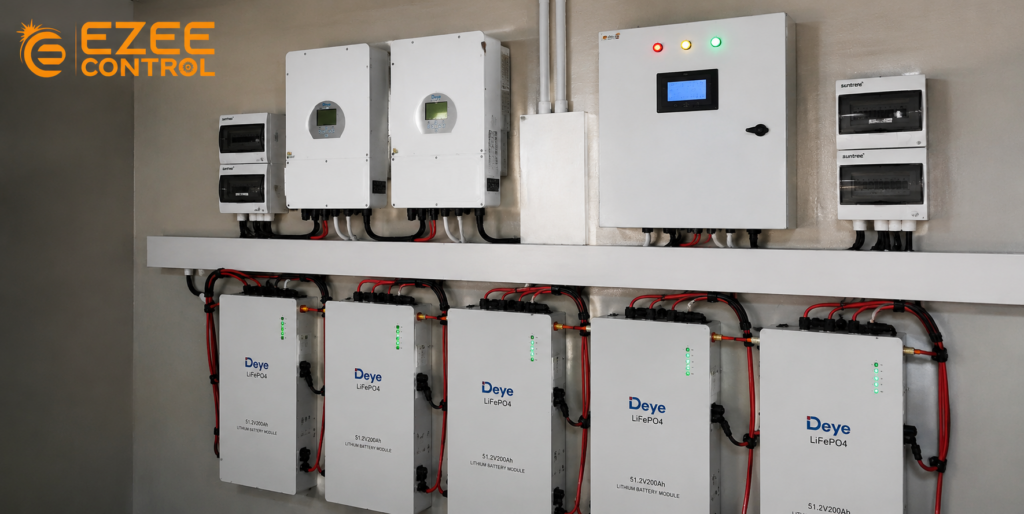
ESS energy storage system installation by Ezee Control showing LiFePO4 battery bank

Net Metering vs Net Billing — What Changed in February 2026

If you have been researching solar in Pakistan for more than a year, you may have read about net metering. The rules changed on February 9, 2026. New solar connections are no longer approved under the old net metering framework. Here is exactly what changed and what it means for your system.

The Old Net Metering Framework

Under net metering, every unit of electricity you exported to the GEPCO grid cancelled one unit you imported. If you generated 400 units from solar and used 300 in your home, the 100 units exported offset 100 units of future grid imports at the same rate you pay for consumption. For customers on higher consumption slabs paying PKR 50 or more per unit, this was effectively a PKR 50 credit for every exported unit.

The New Net Billing Framework — NEPRA Prosumer Regulations 2026

On February 9, 2026, NEPRA notified the Distributed Generation and Net Billing Regulations 2026. Under this framework, GEPCO and other DISCOs purchase exported electricity at the national average energy purchase price rather than the consumer tariff. The current national average energy purchase price is approximately PKR 11 per unit.

This means you now receive approximately PKR 11 for each unit you export while paying PKR 40 to 50 or more for each unit you import from GEPCO. The gap is significant. Under the old rules, export and import were essentially equal in value. Under net billing, self-consumption is far more valuable than export.
Comparison Point
Old Net Metering (pre Feb 2026)
New Net Billing Framework
Export buyback rate
Ideal — retrofit only
Requires full new system
Import rate
Possible but hybrid is more cost-effective
Most cost-effective option
Best sizing strategy
Lower — battery and inverter change only
Higher — panels, inverter, battery all new
Eligibility for new connections
Yes — Solis S5 must be replaced with Solis S6
N/A — hybrid inverter included
Existing contracts
From existing on-grid panels (already happening)
From new hybrid system

Key point: If you already have an approved GEPCO net metering connection from before February 9 2026, your contract remains valid until it expires. You are not required to switch to net billing until renewal.

Who Is Eligible for GEPCO Net Billing

Not every solar installation qualifies for net billing. Here are the eligibility conditions under the NEPRA Prosumer Regulations 2026.
Eligibility Condition
Detail
DISCO area
Property must be within the GEPCO supply area. Other DISCOs have their own application processes.
System type
On-grid or hybrid systems that export surplus electricity to the grid. Off-grid systems do not qualify because they have no grid connection.
AEDB-licensed installer
The installer must hold an AEDB licence. Ezee Control does not currently hold its own AEDB licence. We process applications through our third-party AEDB-licensed partner.
System size
Systems up to 1MW are eligible under the Prosumer framework. Residential systems are typically 3kW to 30kW. Commercial systems vary.
Zero export mode
Systems configured in zero export mode do not export to the grid and therefore do not qualify for net billing credits. This is a deliberate choice by some customers who prefer simpler operation without a billing relationship.
Existing connection
The property must have an existing GEPCO metered connection. Off-grid properties without a GEPCO connection cannot apply.

The GEPCO Net Billing Application Process

If you are deciding between retrofitting your existing on-grid system with ESS or replacing it with a full hybrid system, the table below covers the key considerations.
1

The GEPCO Net Billing Application Process

Before any application is submitted, your solar system must be fully commissioned and tested. The inverter must be operating correctly, the protection devices must be in place and the monitoring must be configured. We commission the system on the final day of installation and confirm all electrical parameters before handover.
2

Single Line Diagram Preparation

A single line diagram of your solar system showing the panels, inverter, protection devices, earthing and connection point to the GEPCO supply is required for the application. Our AEDB-licensed partner prepares this document to the specification required by GEPCO and AEDB.
3

AEDB Application Submission

The AEDB-licensed installer submits the application to AEDB on your behalf. The application includes the system details, single line diagram, installer licence details, property connection information and the relevant application form. Our partner handles the submission and tracks the application status.
4

GEPCO Technical Inspection

GEPCO assigns an inspection team to visit the property and verify the installed system against the submitted documentation. The inspection confirms the system is installed correctly, protection devices are in place and the connection is suitable for bidirectional metering. We coordinate the inspection date and have a team member present during the visit.
5

Bidirectional Meter Installation

Once the inspection is passed, GEPCO replaces your standard energy meter with a bidirectional meter that records both import and export units separately. This is done by GEPCO directly. The timeline for meter replacement varies but is typically 2 to 4 weeks after inspection approval.
6

Net Billing Agreement

After the bidirectional meter is installed, a net billing agreement is signed between you and GEPCO. This agreement sets out the terms of the arrangement including the export buyback rate and the billing cycle. From this point your GEPCO bills will show both import and export readings.
Total timeline from system commissioning to approved bidirectional metering is typically 6 to 10 weeks. Delays can occur at the GEPCO inspection and meter installation stages, which are outside our control. We track the application and follow up on your behalf throughout. For an engineering checklist of the work performed prior to filing, review our technical Step-by-step guide.

Documents Required for the Application

You will need to provide the following documents. We advise you on the exact copies and formats required for your connection type at the time of application.
Document
Detail
GEPCO consumer number and recent electricity bill
Required to identify your account and confirm connection type. Your latest 3 months of bills are preferred.
CNIC copy of the registered consumer
Must match the name on the GEPCO account.
Property ownership or tenancy document
Title deed, registry or lease agreement. Required to confirm you have the right to install the system on the property.
Completed AEDB application form
Completed by our AEDB-licensed partner. We guide you on any sections requiring your input.
Single line diagram
Prepared by our AEDB-licensed partner based on the installed system.
System specification sheet
Inverter datasheet, panel datasheet and battery datasheet where applicable. We provide these from our installation records.
Installation completion certificate
Confirming the system has been installed and commissioned. Prepared by our AEDB-licensed partner.
Photographs of the installed system
Panels on roof, inverter, metering board and earthing connection. We take these at commissioning.
We collect and prepare most of these documents on your behalf. The items you need to provide are your CNIC, your GEPCO bills and your property ownership document. Everything else is handled by our team.

Net Billing Rates and What to Expect

Understanding the financial mechanics of net billing helps you set realistic expectations and design your system correctly from the start.

The Export Buyback Rate

Under the NEPRA Prosumer Regulations 2026, GEPCO purchases your exported units at the national average energy purchase price. This rate is set by NEPRA and adjusted periodically. At the time of publication, the national average energy purchase price is approximately PKR 11 per unit. This figure may change. Verify the current rate with us before finalising your system design.

Why Self-Consumption Matters More Than Export

Every unit of solar electricity you consume directly in your property saves you the full grid import tariff, which is PKR 40 to 50 or more depending on your consumption slab. Every unit you export earns approximately PKR 11. The financial difference between consuming a unit and exporting it is PKR 29 to 39 per unit. Over a year, this difference is significant.

A system sized to match your daytime consumption closely and export only genuine surplus will outperform a deliberately oversized system designed to maximise export. We design on-grid and hybrid systems with this principle as the starting point.

Annual Net Billing Credit

On an annual basis, most well-designed on-grid or hybrid systems in Pakistan produce more units in summer and fewer in winter. Your GEPCO bill will show a net billing credit in high-generation months and may show a small import balance in low-generation months. The net billing agreement allows you to carry forward credits from high-generation months to offset imports in low-generation months within the billing cycle terms.

Important: The national average energy purchase price of PKR 11 per unit is subject to NEPRA revision. This page will be updated when the rate changes. Verify the current rate before making a final investment decision.

How Ezee Control Handles the Process for You

We are transparent about one thing from the start: Ezee Control Private Limited does not currently hold its own AEDB licence. The AEDB licence required to submit net billing applications is held by our third-party partner. This does not affect the outcome for you. The application is submitted, processed and approved in the same way. The only difference is that the licensed installer on the application is our partner rather than Ezee Control directly.

What We Do

We coordinate the full application on your behalf. We collect the required documentation, brief our AEDB-licensed partner, track the application status with AEDB, coordinate the GEPCO inspection visit, follow up on the meter replacement and inform you at each stage. You do not need to deal with AEDB or GEPCO directly.

What You Do

You provide your CNIC, your GEPCO bills and your property ownership document. You make yourself available for the GEPCO inspection visit at the agreed time. That is the extent of your involvement.

Our Track Record

Two of our completed projects have received GEPCO net billing approval: the 10.44kW on-grid installation in Madina Colony (January 2025, approved under the old net metering framework before February 2026) and the 15.66kW 3-phase hybrid installation at Jamia Masjid Noor e Hidayat in Peoples Colony (August 2025, approved under the old net metering framework). Both approvals were processed through the same third-party partner we use today. New applications from February 2026 are processed under the net billing framework. To analyze our active engineering profiles, see our completed projects with net billing approvals.

GEPCO Net Billing Questions

Does Ezee Control hold its own AEDB licence?

No. Ezee Control Private Limited does not currently hold its own AEDB licence. Net billing applications are processed through our third-party AEDB-licensed partner. The application outcome and process is the same for the customer. We handle all coordination.

Can I still get net metering in Pakistan?

No. Net metering is no longer available for new connections in Pakistan. It was replaced by net billing under the NEPRA Prosumer Regulations 2026, notified on February 9 2026. If you already have an approved net metering contract before that date, it remains valid until it expires.

How long does the GEPCO net billing application take?

The full process from system commissioning to approved bidirectional metering typically takes 6 to 10 weeks. The main stages are AEDB application submission, GEPCO technical inspection and bidirectional meter installation. Delays at the GEPCO inspection and meter installation stages are outside our control and can extend the timeline.

What happens to my GEPCO bill after net billing is approved?

Your GEPCO bill will show two readings: units imported from the grid and units exported to the grid. Imported units are billed at the standard consumer tariff. Exported units are credited at the national average energy purchase price (currently approximately PKR 11 per unit). In high-generation months you may see a credit balance which carries forward to offset future imports.

Does my system need to be a specific size for net billing?

No fixed minimum size, but the system must export surplus electricity to the grid to benefit from net billing. A system configured in zero export mode does not export and therefore does not qualify. Systems up to 1MW are eligible under the Prosumer framework. Most residential and commercial systems fall well within this limit.

Is net billing available for 3-phase commercial connections?

Yes. GEPCO net billing is available for both single phase and 3-phase connections. Commercial properties including schools, mosques, offices and plazas on 3-phase GEPCO connections can apply. The application process is the same. The system must be capable of bidirectional metering.

What is the difference between net billing and zero export mode?

Net billing means your system exports surplus electricity to GEPCO and receives a credit at the buyback rate. Zero export mode means the inverter prevents any export to the grid and all generation is consumed on site. Zero export mode requires no net billing application or AEDB involvement. It is simpler but you receive no credit for surplus generation.

Ready to Start the Net Billing Application?

Contact us with your GEPCO consumer number, your latest electricity bill and your system type. We will confirm whether your installation qualifies and begin the process through our AEDB-licensed partner.
© 2026 Ezee Control Private Limited. All rights reserved. Registered with SECP & FBR.
Headquarters: Citi Housing Society, Gujranwala, Punjab, Pakistan.
Call Expert:
+92 339 6000105
WhatsApp Blueprint:
+92 339 6000105